
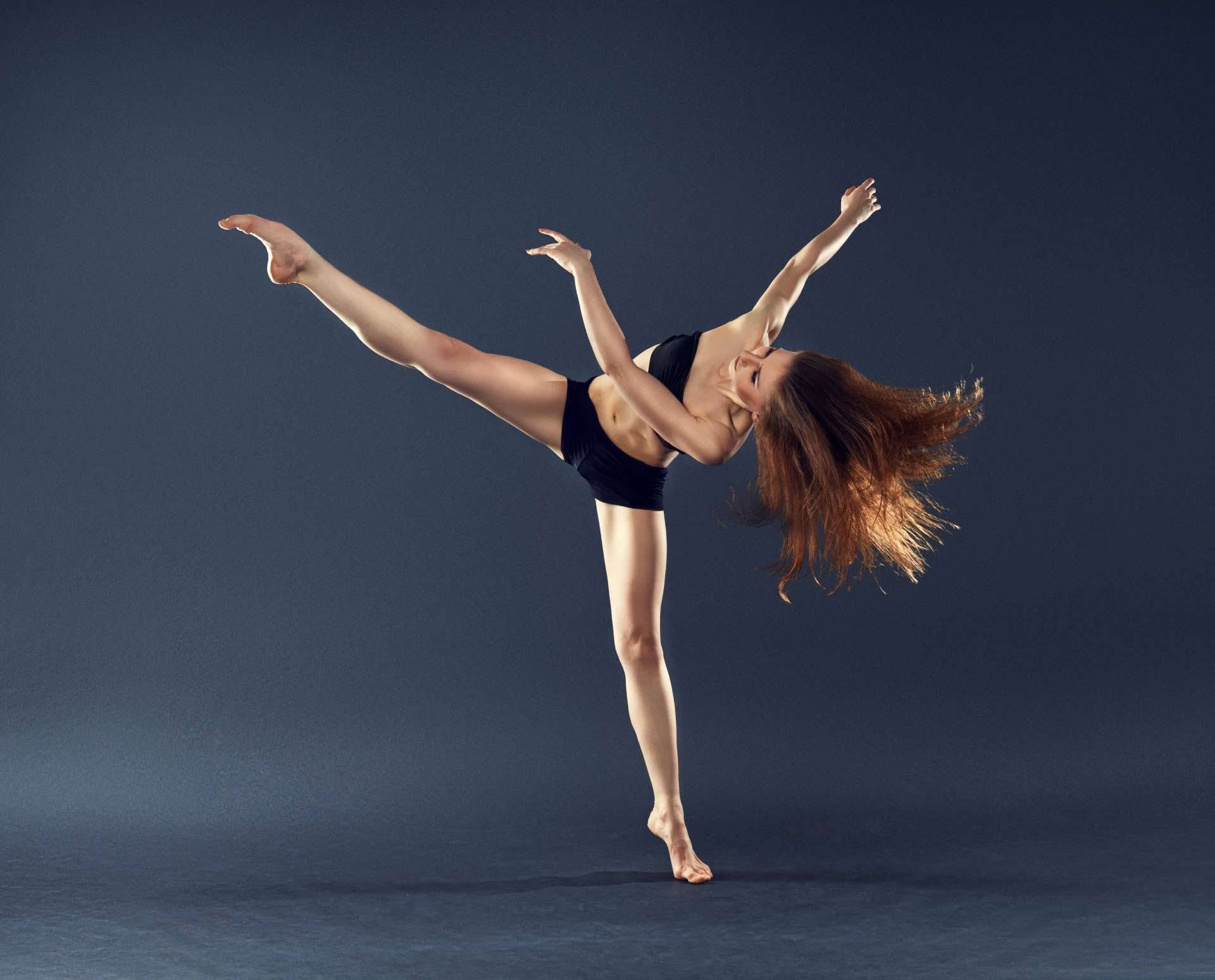
Contemporary dance draws on a range of systems and methods that grew into a new kind of dance expression in America in the late 1920s. Its principles and technique are tied to natural forces — gravity, swing, fall, recovery and balance — and it plays with contrasting dynamics.
Students learn to control their weight and to use the floor: to fall, to rise, to roll. The body gains strength, plasticity and flexibility in a way that differs from ballet but is just as demanding.
Contemporary dance gives students freedom of movement and a new way to express themselves. It lets dancers move freely, without fixed rules — the freest expression of each dancer — while developing musicality and rhythm.